Current TRG vs GPS Statistics
last update: Thu May 26 09:00:39 JST 2005
Plots of last 24 hours
from to (UTC)

Relative time between spills (via TRG 48-bit clock)
same as above, but zoomed in [2.17 ... 2.21] and with histogram
Spill rate measured via GPS1 (blue) and TRG (red)
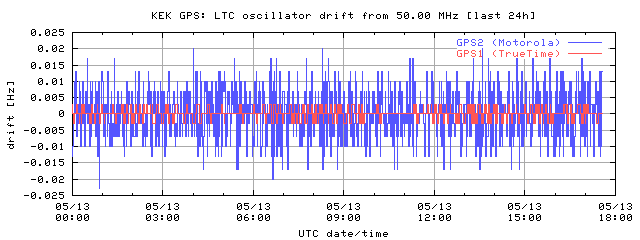
LTC oscillator drift from 50 MHz (*1)
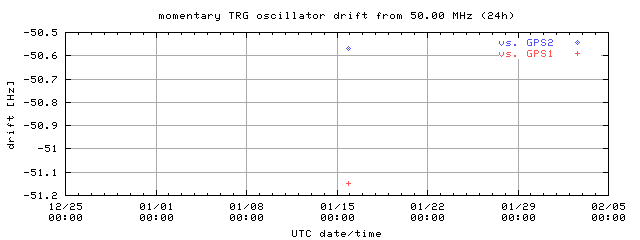
TRG oscillator drift from 50 MHz (*1)
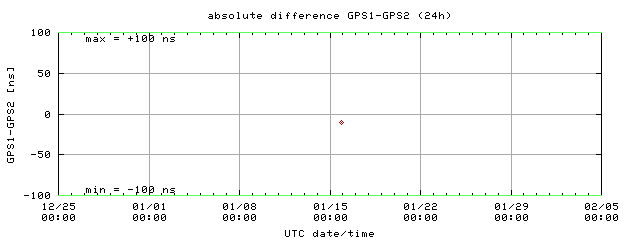
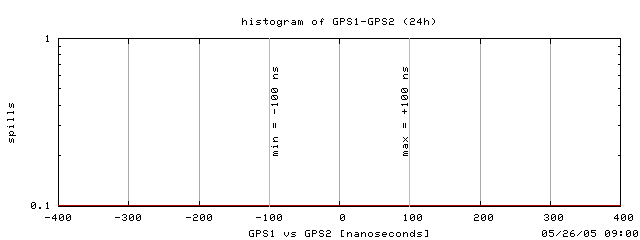
Absolute spill time difference between GPS1 and GPS2
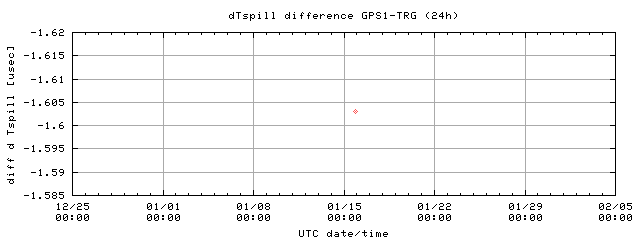
Relative spill time difference between GPS1 and TRG (*2)
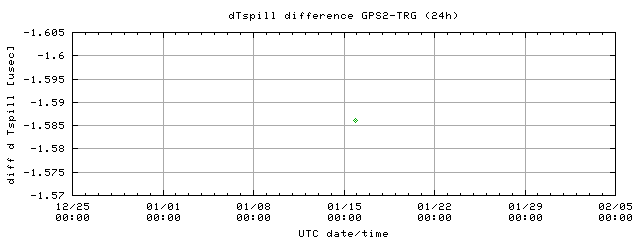
Relative spill time difference between GPS2 and TRG (*2)
Plots of last 7 days
from to (UTC)
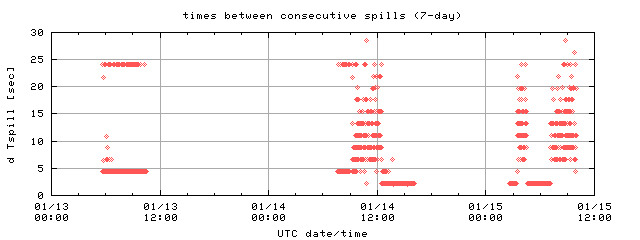
Relative time between spills (via TRG 48-bit clock)
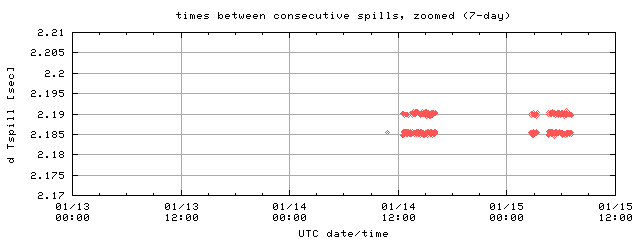
same as above, but zoomed in [2.17 ... 2.21] and with histogram
Spill rate measured via GPS1 (blue) and TRG (red)

LTC oscillator drift from 50 MHz (*1)
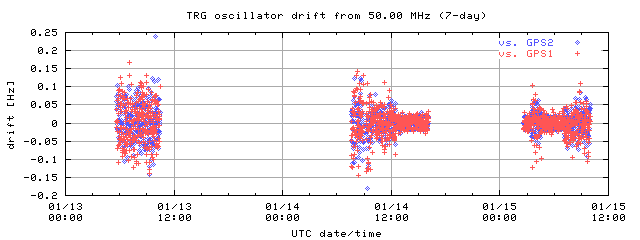
TRG oscillator drift from 50 MHz (*1)
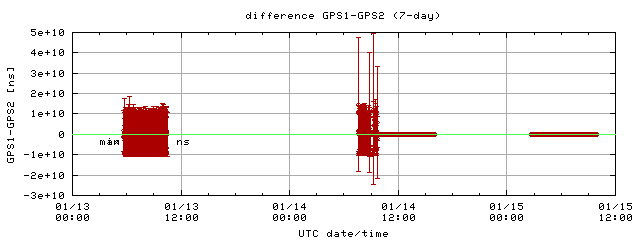
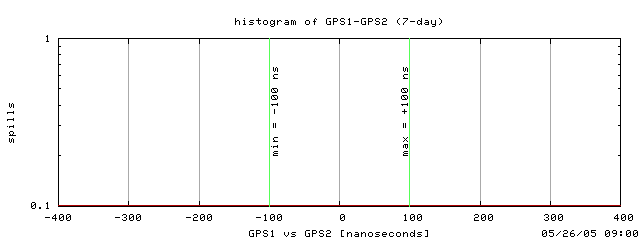
Absolute spill time difference between GPS1 and GPS2
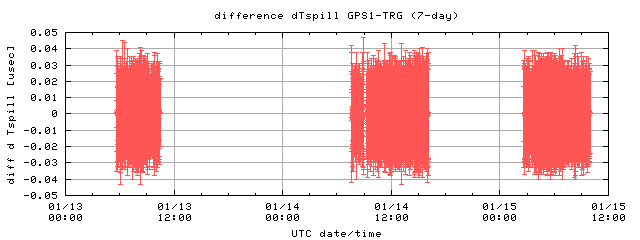
Relative spill time difference between GPS1 and TRG (*2)
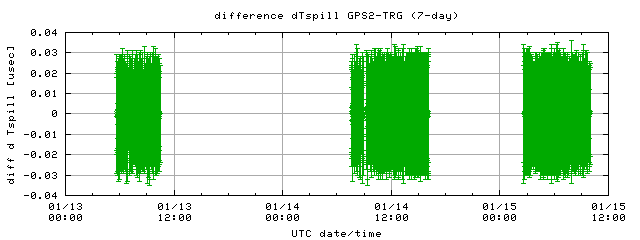
Relative spill time difference between GPS2 and TRG (*2)
Histograms
Note: y axis is log scale!
Notes
| (*1) | A rubidium clock was installed 6/9/2003 as 50.0 MHz precision reference clock for both, the Local Time Clock (LTC) and the TRG module. It is PLL-synchronized to the 1PPS signal of the backup GPS receiver (GPS2: Motorola). |
| (*2) | GPS2 is now based on the 1PPS output of the rubidium clock, which is basically low-pass filtered from the original 1PPS signal of the backup GPS receiver. The expected error between GPS1 and GPS2 is approx. 20 nsec rms or better and +/-100 nsec worst case, even with loss of satellite lock for several minutes. |
See also list of errors